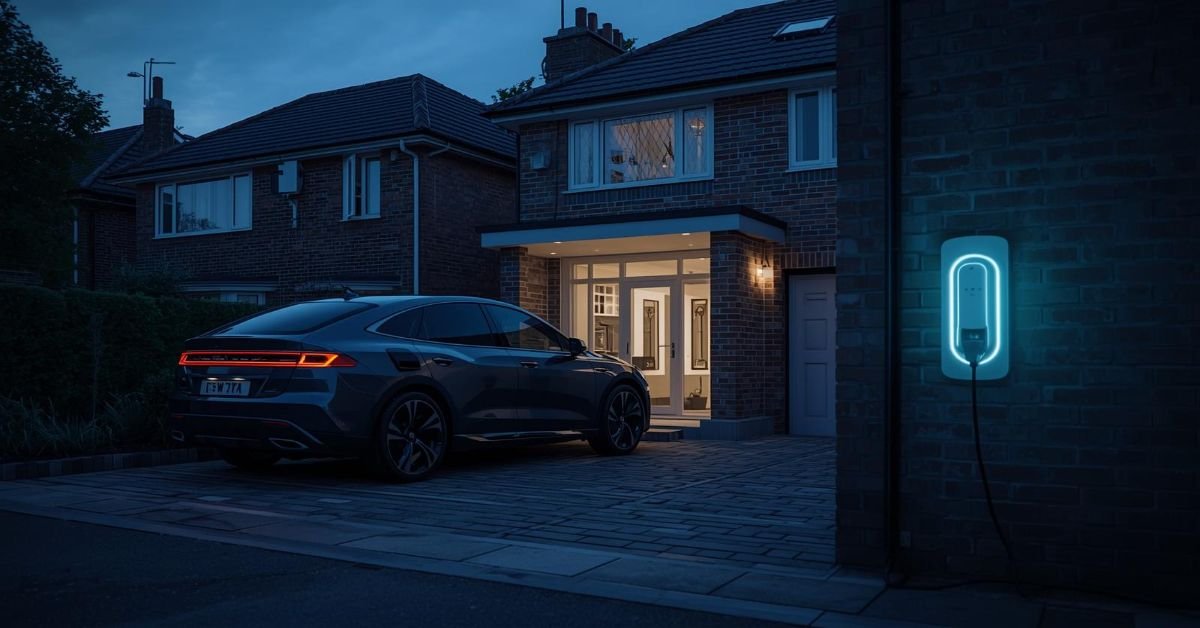
The transition to electric vehicles (EVs) in the UK is accelerating rapidly, driven by environmental goals, rising fuel costs, and government support. One of the most impactful incentives available to EV owners is the home EV charger government grant UK, designed to make installing a charging point at home more affordable and accessible.
Understanding Home EV Charging in the UK
Electric vehicles require regular charging, and while public charging networks are expanding, home charging remains the most convenient and cost-effective option.
Why Home Charging Matters
- Convenience: Charge overnight without visiting public stations
- Cost Savings: Lower electricity tariffs compared to public charging
- Time Efficiency: No waiting in queues
- Battery Health: Slow charging at home is better for long-term battery life
However, installing a home EV charger can cost between £800 and £1,500, which is where government grants come in.
Overview of UK Government EV Charger Grants
The UK government has introduced multiple schemes to support EV adoption. These grants aim to reduce upfront costs and encourage infrastructure growth.
Main Grant Scheme (Current)
The primary scheme currently available is:
EV Chargepoint Grant
This grant supports:
- Flat owners
- Renters
- Landlords
It replaced earlier schemes like the Electric Vehicle Homecharge Scheme (EVHS).
EV Chargepoint Grant: Key Details
The EV Chargepoint Grant provides financial support for installing EV chargers in residential properties.
Grant Coverage
- Covers up to 75% of installation costs
- Maximum grant amount: £350 per socket
Eligibility Criteria
To qualify, you must:
- Own, lease, or rent an eligible electric vehicle
- Live in a flat or rented accommodation
- Have dedicated off-street parking
- Use an OZEV-approved installer
Grant Details Table
| Category | Details |
|---|---|
| Grant Name | EV Chargepoint Grant |
| Coverage | Up to 75% of cost |
| Maximum Amount | £350 per charger |
| Eligible Users | Renters, flat owners, landlords |
| Parking Requirement | Off-street parking |
| Installer Requirement | OZEV-approved installer |
| Application Method | Through installer |
Who Can Apply for the Grant?
The UK government has expanded eligibility to make EV adoption more inclusive.
1. Homeowners (Limited Access)
Currently, homeowners in single-unit properties have limited direct grant access compared to earlier schemes.
2. Renters
Renters are a major focus:
- Can apply with landlord permission
- Must have dedicated parking space
3. Flat Owners
Flat residents can apply if:
- Parking space is allocated
- Installation is feasible
4. Landlords
Landlords can apply for:
- Multiple properties
- Up to 200 grants per year
Read more:EV charging station setup cost UK
Landlord Grant Scheme Overview
| Feature | Details |
|---|---|
| Maximum Grants | 200 per year |
| Coverage | 75% of cost |
| Cap per Installation | £350 |
| Eligible Properties | Rental properties |
| Additional Support | EV infrastructure grants available |
Step-by-Step Application Process
Applying for the EV charger grant is straightforward when you follow these steps:
Step 1: Check Eligibility
Confirm:
- Vehicle eligibility
- Property suitability
- Parking availability
Step 2: Choose an Approved Installer
Only OZEV-approved installers can process the grant.
Step 3: Request a Quote
Installers will:
- Assess your property
- Provide installation cost
- Confirm grant eligibility
Step 4: Installer Applies for Grant
You do not apply directly. The installer handles:
- Documentation
- Grant claim submission
Step 5: Installation
Once approved:
- Charger is installed
- Grant amount deducted from your bill
Installation Cost Breakdown
| Cost Component | Estimated Price (£) |
|---|---|
| Charger Unit | 500 – 900 |
| Installation | 300 – 600 |
| Electrical Upgrades | 100 – 400 |
| Total Cost | 800 – 1500 |
| Grant Deduction | Up to -350 |
| Final Cost | 450 – 1150 |
Types of Home EV Chargers
Understanding charger types helps you choose the right system.
1. Slow Chargers (3kW)
- Basic option
- Long charging time (8–12 hours)
2. Fast Chargers (7kW)
- Most common choice
- Full charge in 6–8 hours
3. Smart Chargers
- App-controlled
- Schedule charging during off-peak hours
- Required for most grant eligibility
Comparison Table of Charger Types
| Charger Type | Power Output | Charging Time | Best For |
|---|---|---|---|
| Slow | 3kW | 8–12 hours | Occasional users |
| Fast | 7kW | 6–8 hours | Daily EV owners |
| Smart Charger | 7kW+ | Optimized | Cost & energy savings |
Smart Charging Requirements
To qualify for grants, chargers must meet smart charging standards:
- Remote access via mobile app
- Ability to delay charging
- Energy monitoring features
- Compliance with UK regulations
Benefits of the EV Charger Grant
1. Financial Savings
- Reduces upfront cost significantly
- Makes EV ownership more affordable
2. Increased Property Value
Homes with EV chargers:
- Attract modern buyers
- Increase resale value
3. Environmental Impact
Supports:
- Reduced carbon emissions
- Cleaner urban air
4. Energy Efficiency
Smart charging:
- Uses cheaper electricity tariffs
- Reduces grid strain
Common Challenges and Solutions
Challenge 1: No Off-Street Parking
Solution:
- Consider workplace or public charging
- Explore local council initiatives
Challenge 2: Landlord Permission
Solution:
- Provide cost-benefit explanation
- Highlight property value increase
Read more:UK Government EV Battery Research Funding
Challenge 3: Installation Complexity
Solution:
- Use experienced OZEV-approved installers
- Request site survey before installation
Government Policy and Future Outlook
The UK government plans to:
- Ban new petrol and diesel car sales by 2035
- Expand EV infrastructure nationwide
- Increase support for residential charging
Future Grant Expectations
- Potential expansion to homeowners
- Increased funding for shared residential buildings
- Smart grid integration incentives
Comparison with Previous EVHS Scheme
| Feature | EVHS (Old) | EV Chargepoint Grant (New) |
|---|---|---|
| Eligibility | Homeowners included | Focus on renters & flats |
| Grant Amount | Up to £350 | Up to £350 |
| Coverage | 75% | 75% |
| Application Method | Installer | Installer |
| Status | Closed | Active |
Tips to Maximize Your Grant Benefits
- Choose smart chargers with energy tracking
- Install during property upgrades
- Compare multiple installer quotes
- Use off-peak tariffs like Economy 7
- Plan for future EV upgrades
Frequently Asked Questions (FAQs)
Is the EV charger grant still available in 2026?
Yes, the EV Chargepoint Grant is currently active for renters, flat owners, and landlords.
Can homeowners apply?
Most standalone homeowners are not currently eligible unless they meet specific conditions.
Do I need to apply myself?
No, the installer handles the application process.
Can I install more than one charger?
Yes, especially for landlords managing multiple properties.
How long does approval take?
Usually within a few days when processed by approved installers.
Conclusion
The home EV charger government grant UK plays a crucial role in accelerating the adoption of electric vehicles across the country. By reducing installation costs and encouraging smart charging solutions, the government is making EV ownership more practical and accessible.
For renters, flat owners, and landlords, this grant represents a valuable opportunity to future-proof properties, save money, and contribute to a cleaner environment. While eligibility is currently limited for some homeowners, the overall direction of UK policy suggests broader support in the near future.
4 thoughts on “Home EV Charger Government Grant UK”