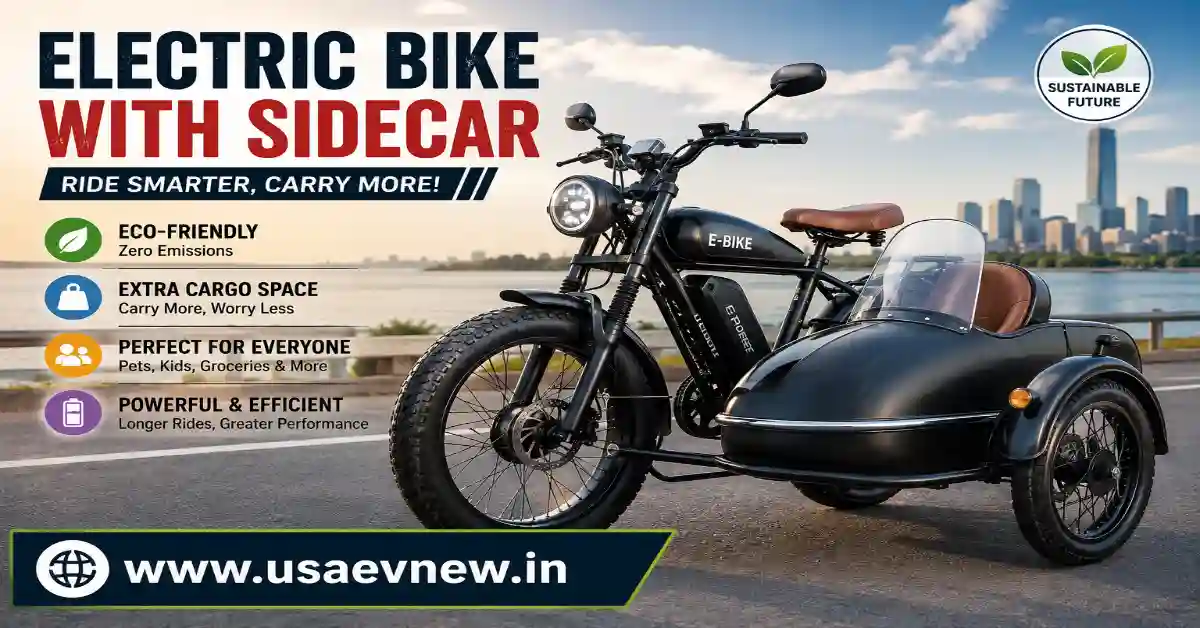
Electric Bike with Sidecar combines the efficiency of an e-bike with the practicality of an attached sidecar. Whether you need extra storage, want to transport a child or pet, or simply enjoy a unique riding experience, a sidecar-equipped electric bike offers versatility that standard bicycles cannot match.
This guide explains how these bikes work, their advantages, buying considerations, and common questions to help you choose the right model.
What Is an Electric Bike with Sidecar?
An electric bike with sidecar is an e-bike fitted with a separate wheel and compartment attached beside the bicycle.
Common Uses
- Carrying groceries
- Pet transportation
- Child transportation (where legally permitted)
- Commercial deliveries
- Recreational touring
- Camping equipment
Unlike trailers, sidecars remain attached beside the bike, providing easier access to cargo during rides.
Why Choose an Electric Bike with Sidecar?
Many riders choose a sidecar because it adds functionality without relying on a car.
Benefits
- Extra carrying capacity
- Better balance while parked
- Eco-friendly transportation
- Lower operating costs
- Comfortable for short-distance commuting
- Ideal for small business deliveries
For urban riders, an e-bike with sidecar can replace many daily car trips.
Types of Electric Bike Sidecars
Passenger Sidecar
Designed for carrying one passenger safely according to local regulations.
Cargo Sidecar
Perfect for shopping, deliveries, or work equipment.
Pet Sidecar
Includes safety straps and ventilation for transporting pets comfortably.
Custom Sidecar Kits
Many manufacturers sell electric bike sidecar kits that fit selected bicycle models.
How to Choose the Best Electric Bike with Sidecar
Before buying, evaluate the following factors.
Motor Power
A motor between 500W and 1000W generally performs well when carrying additional weight.
Battery Capacity
Choose batteries with longer range if you frequently carry cargo.
Frame Strength
A reinforced aluminum or steel frame offers better stability.
Weight Capacity
Always check the manufacturer’s maximum payload.
Braking System
Hydraulic disc brakes provide stronger stopping performance under heavier loads.
Pros and Cons
| Pros | Cons |
|---|---|
| Extra cargo space | Higher purchase cost |
| More practical than standard e-bikes | Wider turning radius |
| Great for deliveries | Heavier overall weight |
| Eco-friendly transportation | Requires adjustment while riding |
| Stable when parked | Limited storage space at home |
Common Mistakes to Avoid
Avoid these mistakes when buying an electric bicycle with sidecar:
- Buying a motor that’s too small
- Ignoring battery range
- Exceeding weight limits
- Choosing poor-quality sidecar attachments
- Forgetting local traffic regulations
- Skipping regular maintenance
Expert Tips Before Purchasing
Experienced riders recommend:
- Test ride before buying.
- Choose waterproof batteries.
- Invest in quality tires.
- Inspect sidecar mounting hardware regularly.
- Recharge batteries correctly.
- Wear protective safety gear.
A well-maintained electric bike sidecar kit can last for years with proper care.
Real-World Example
A local bakery switched from a delivery van to an electric bike with sidecar for neighborhood deliveries.
Results after six months included:
- Lower fuel expenses
- Easier parking
- Faster deliveries during traffic
- Reduced maintenance costs
- Improved customer perception due to environmentally friendly transportation
This example demonstrates why many small businesses are adopting sidecar-equipped e-bikes.
Is an Electric Bike with Sidecar Worth Buying?
If you regularly carry cargo, pets, or delivery items, an electric bike with sidecar offers outstanding value. While the initial investment may be higher than a standard e-bike, lower transportation costs and increased practicality often make it worthwhile over time.
Conclusion
An electric bike with sidecar is a practical solution for commuters, families, pet owners, and businesses seeking eco-friendly transportation with additional carrying capacity. By selecting the right motor, battery, frame, and sidecar design, you can enjoy safer, more efficient rides while reducing your dependence on a car.
Call to Action: Compare different models, review their specifications carefully, and choose an electric bike with sidecar that matches your daily transportation needs and budget.
Frequently Asked Questions
1. What is an electric bike with sidecar?
An electric bike with sidecar is an e-bike equipped with an attached side compartment for carrying cargo, pets, or passengers, depending on its design.
2. Is a sidecar safe on an electric bike?
Yes. When professionally installed and used within weight limits, a sidecar can be safe and stable.
3. Can I install a sidecar on any electric bike?
Not every bike supports a sidecar. Compatibility depends on the frame design, axle, and manufacturer recommendations.
4. How much weight can a sidecar carry?
Most sidecars support between 50 kg and 150 kg, depending on the model and construction.
5. Does adding a sidecar reduce battery range?
Yes. Extra weight increases energy consumption, reducing overall riding range.
6. Are electric bike sidecars legal?
Regulations vary by country and region. Always check local traffic laws before riding.
7. What motor size is recommended?
A motor rated between 500W and 1000W is commonly recommended for carrying heavier loads.
8. Can pets ride in a bike sidecar?
Yes. Many sidecars are specifically designed for pets and include safety features.
9. How much does an electric bike with sidecar cost?
Prices vary widely based on motor power, battery size, and sidecar design, from entry-level options to premium custom builds.
10. Is maintenance different from a normal e-bike?
Yes. In addition to normal e-bike maintenance, inspect the sidecar frame, wheel, mounting brackets, and alignment regularly.
1 thought on “Electric Bike with Sidecar | Buying Guide”