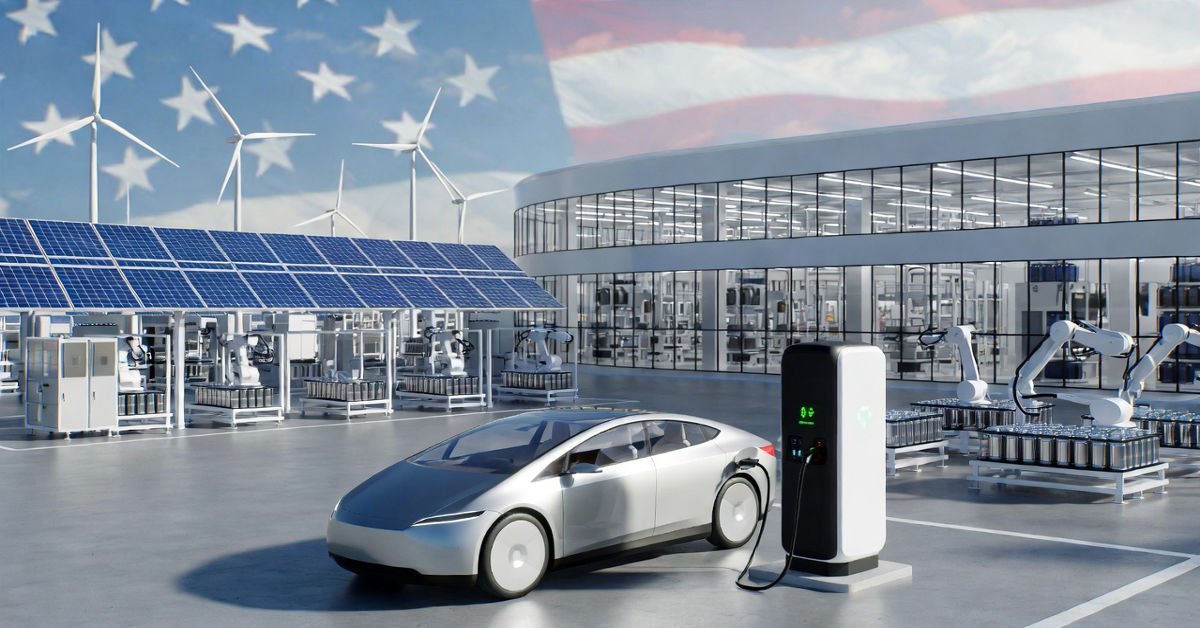
The United States automotive battery industry stands at the center of a rapidly transforming transportation ecosystem. As electric vehicles (EVs), hybrid cars, and advanced driver technologies gain momentum, batteries have become the most critical component driving innovation, sustainability, and economic growth. From traditional lead-acid batteries to advanced lithium-ion and solid-state technologies, the U.S. battery market is reshaping how vehicles are powered and manufactured.
Understanding Automotive Batteries
Automotive batteries serve two primary purposes: starting internal combustion engine (ICE) vehicles and powering electric drivetrains in EVs and hybrids. The evolution of battery chemistry reflects the automotive industry’s shift toward cleaner and more efficient transportation.
Main Types of Automotive Batteries
| Battery Type | Key Use | Characteristics |
|---|---|---|
| Lead-Acid | Conventional vehicles | Low cost, recyclable, heavy |
| Lithium-Ion (Li-ion) | EVs and hybrids | High energy density, long lifespan |
| Nickel-Metal Hydride (NiMH) | Hybrid vehicles | Stable, moderate cost |
| Solid-State (emerging) | Future EVs | Safer, higher capacity |
| AGM & EFB | Start-stop vehicles | Improved durability |
Lithium-ion batteries dominate the EV segment due to their superior energy density, lighter weight, and fast charging capability.
Market Size and Growth of the U.S. Automotive Battery Industry
The U.S. automotive battery market has experienced strong growth over the last decade, driven primarily by the rapid adoption of electric vehicles and stricter emissions regulations.
Key Market Drivers
-
Expansion of electric vehicle production
-
Federal and state incentives for clean energy
-
Corporate investments in battery manufacturing plants
-
Rising consumer demand for sustainable transportation
-
Improvements in battery efficiency and lifespan
Market Growth Overview Table
| Segment | Growth Trend | Primary Driver |
|---|---|---|
| Lead-acid batteries | Stable | Replacement market |
| Lithium-ion batteries | High growth | EV adoption |
| Solid-state batteries | Emerging | R&D investments |
| Recycling sector | Rapid growth | Sustainability goals |
The lithium-ion battery segment now accounts for the largest share of new investment due to its central role in electric vehicle platforms.
Major Players in the U.S. Automotive Battery Industry
The industry includes a mix of global corporations and domestic manufacturers. These companies focus on innovation, supply chain security, and cost reduction.
Leading Manufacturers and Suppliers
| Company Type | Examples | Focus Area |
|---|---|---|
| Battery Manufacturers | Panasonic, LG Energy Solution, SK On | EV battery cells |
| Automakers | Tesla, Ford, General Motors | In-house battery development |
| Materials Suppliers | Albemarle, Livent | Lithium and raw materials |
| Recycling Firms | Redwood Materials, Li-Cycle | Battery reuse and recovery |
Automakers increasingly partner with battery producers to establish gigafactories within the United States, ensuring domestic supply and reducing reliance on overseas manufacturing.
Role of Government Policies and Incentives
Government policy plays a decisive role in shaping the U.S. automotive battery industry. Federal initiatives aim to strengthen domestic manufacturing and reduce dependence on imported components.
Key Policy Areas
-
Clean energy tax credits
-
Infrastructure funding for EV charging
-
Research grants for next-generation batteries
-
Domestic supply chain incentives
-
Environmental regulations on emissions
Policy Impact Table
| Policy Area | Industry Impact |
|---|---|
| EV tax incentives | Boosts battery demand |
| Manufacturing subsidies | Encourages factory construction |
| Recycling mandates | Supports circular economy |
| Emission standards | Pushes automakers toward electrification |
These policies have accelerated private sector investments and helped position the U.S. as a global competitor in battery technology.
Battery Manufacturing and Supply Chain
The U.S. automotive battery supply chain is complex and includes raw material extraction, cell manufacturing, module assembly, and recycling.
Supply Chain Stages
-
Raw material sourcing (lithium, cobalt, nickel)
-
Battery cell production
-
Battery pack assembly
-
Vehicle integration
-
End-of-life recycling
Supply Chain Overview Table
| Stage | Key Activity | Main Challenge |
|---|---|---|
| Mining | Material extraction | Environmental concerns |
| Manufacturing | Cell and pack production | High capital cost |
| Distribution | Transport and storage | Safety and logistics |
| Recycling | Material recovery | Scaling technology |
Recent efforts focus on creating localized supply chains to improve resilience and reduce geopolitical risks.
Technological Innovations in Automotive Batteries
Technology innovation is the backbone of the U.S. automotive battery industry. Research focuses on improving energy density, charging speed, safety, and longevity.
Current Innovation Trends
-
Solid-state battery research
-
Fast-charging lithium-ion cells
-
Battery management systems (BMS)
-
Thermal regulation technologies
-
Artificial intelligence in battery diagnostics
Technology Comparison Table
| Technology | Benefit | Development Stage |
|---|---|---|
| Solid-state batteries | Higher safety and capacity | Pilot phase |
| Silicon anodes | Improved energy density | Commercial testing |
| AI-based BMS | Predictive maintenance | Growing adoption |
| Wireless charging | User convenience | Early adoption |
These advancements aim to reduce range anxiety and make electric vehicles more affordable and practical.
Environmental and Sustainability Impact
Sustainability is a major focus of the U.S. automotive battery industry. Battery production has environmental implications, but new practices aim to minimize harm and maximize reuse.
Key Sustainability Strategies
-
Battery recycling programs
-
Use of renewable energy in factories
-
Ethical sourcing of minerals
-
Second-life battery applications
-
Reduced carbon footprint in logistics
Environmental Impact Table
| Practice | Benefit |
|---|---|
| Recycling | Reduces mining demand |
| Clean energy factories | Lowers emissions |
| Second-life batteries | Extends product lifecycle |
| Local sourcing | Cuts transportation emissions |
Recycling is becoming one of the fastest-growing segments, helping the industry move toward a circular economy model.
Challenges Facing the Industry
Despite rapid growth, the U.S. automotive battery industry faces several challenges that could impact long-term stability.
Major Challenges
-
High production costs
-
Raw material shortages
-
Skilled labor gaps
-
Infrastructure limitations
-
Safety concerns with battery storage
Challenge Analysis Table
| Challenge | Industry Response |
|---|---|
| Cost pressure | Automation and scale |
| Material supply risk | Domestic mining projects |
| Workforce shortage | Training programs |
| Recycling complexity | New recovery technologies |
Addressing these challenges requires cooperation between industry, government, and educational institutions.
Economic Impact and Job Creation
The automotive battery industry has become a major economic driver within the U.S. manufacturing sector. New battery plants bring jobs, regional development, and technological expertise.
Economic Contributions
-
Creation of thousands of skilled jobs
-
Development of regional manufacturing hubs
-
Boost in research and development spending
-
Growth of supporting industries
-
Increased export potential
Economic Impact Table
| Area | Contribution |
|---|---|
| Employment | Manufacturing and engineering jobs |
| Investment | Billions in factory development |
| Innovation | Growth in battery patents |
| Trade | Reduced import dependency |
States such as Michigan, Tennessee, Texas, and Nevada have emerged as key centers for battery production.
Future Outlook of the U.S. Automotive Battery Industry
The future of the U.S. automotive battery industry appears strong and promising. Continued innovation, regulatory support, and consumer acceptance of electric vehicles will shape the next decade.
Future Trends
-
Mass adoption of solid-state batteries
-
Lower battery costs per kilowatt-hour
-
Expansion of domestic gigafactories
-
Greater focus on recycling infrastructure
-
Integration with smart energy grids
Future Market Outlook Table
| Trend | Expected Impact |
|---|---|
| Solid-state adoption | Improved EV performance |
| Cost reduction | Wider consumer access |
| Recycling growth | Sustainable supply chain |
| Grid integration | Energy storage solutions |
As battery technology evolves, it will not only support transportation but also strengthen national energy independence.
Importance of Research and Education
Universities and research institutions play a vital role in advancing battery science. Partnerships between industry and academia help develop the next generation of engineers and scientists.
Research Focus Areas
-
New battery chemistries
-
Sustainable material sourcing
-
Battery safety improvements
-
Recycling efficiency
-
Energy storage integration
Education programs ensure a skilled workforce capable of maintaining America’s leadership in battery technology.
Consumer Perspective and Market Adoption
From a consumer viewpoint, battery reliability and cost are the main decision factors when purchasing electric or hybrid vehicles.
Consumer Expectations
-
Longer driving range
-
Faster charging times
-
Lower replacement costs
-
Improved safety
-
Warranty coverage
As these expectations are met, public trust in battery-powered vehicles continues to rise.
Conclusion
The USA automotive battery industry is a cornerstone of the nation’s transition toward cleaner, more efficient transportation. With strong government support, private investment, and continuous technological innovation, the industry is positioned for sustained growth.
From traditional lead-acid batteries to cutting-edge solid-state solutions, the sector reflects both America’s industrial heritage and its future ambitions. While challenges such as raw material supply and manufacturing costs remain, the combined efforts of manufacturers, policymakers, and researchers are building a resilient and competitive ecosystem.