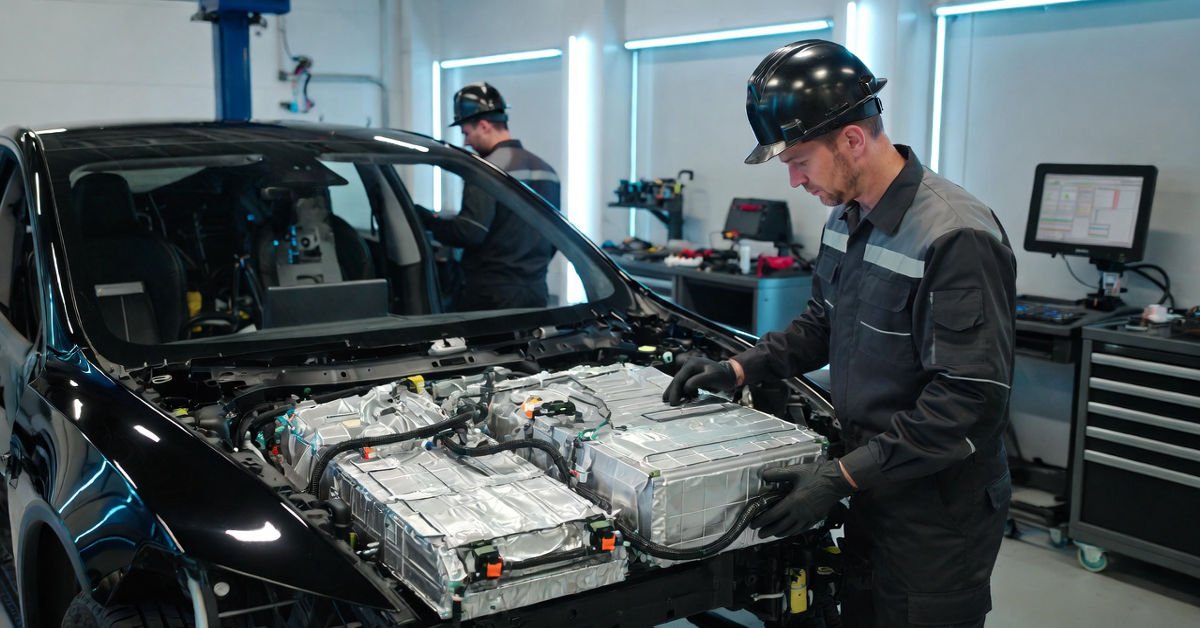
Electric vehicles (EVs) are transforming the global transportation industry by offering cleaner, quieter, and more efficient alternatives to gasoline-powered cars. At the heart of every electric vehicle lies its most important and expensive component: the lithium-ion battery pack. While EV batteries are designed to last many years, battery replacement eventually becomes a reality for some owners.
Understanding EV lithium-ion battery replacement is essential for consumers considering an electric vehicle, fleet operators managing long-term costs, and policymakers promoting sustainable mobility. This article provides an in-depth, experience-based, expert-informed guide to EV battery replacement, covering lifespan, costs, warning signs, replacement procedures, environmental impact, and future innovations.
Understanding Lithium-Ion Batteries in Electric Vehicles
Lithium-ion batteries power nearly all modern electric vehicles due to their high energy density, relatively low weight, and long cycle life. These batteries consist of thousands of individual cells grouped into modules and then assembled into a battery pack. The pack also includes a Battery Management System (BMS) that monitors temperature, voltage, and charging behavior to maximize performance and safety.
Unlike traditional car engines, EV batteries do not suddenly “fail.” Instead, they gradually lose capacity over time. This means the driving range slowly decreases, which eventually may require replacement.
Average Lifespan of EV Lithium-Ion Batteries
Most EV manufacturers design batteries to last between 8 and 15 years, depending on usage patterns, climate, and charging habits. Many brands offer warranties of 8 years or 160,000 kilometers (100,000 miles), guaranteeing that the battery will retain at least 70% of its original capacity during that period.
Factors that affect battery lifespan:
-
Driving frequency and mileage
-
Exposure to extreme heat or cold
-
Fast charging versus slow charging
-
Depth of discharge (how often the battery is drained close to zero)
-
Quality of thermal management systems
With proper care, many EV owners report minimal degradation even after 200,000 kilometers of driving.
When Does an EV Battery Need Replacement?
Battery replacement is not common in the first several years of ownership. However, certain signs may indicate that replacement is approaching.
Common warning signs:
-
Noticeable reduction in driving range
-
Longer charging times
-
Frequent battery overheating alerts
-
Error messages from the Battery Management System
-
Vehicle entering reduced performance mode
In most cases, a battery does not need full replacement. Some vehicles allow module-level repair, replacing only damaged sections instead of the entire pack.
Cost of EV Lithium-Ion Battery Replacement
Battery replacement cost is one of the most discussed concerns among potential EV buyers. Prices vary depending on battery size, vehicle model, labor, and regional market conditions.
Estimated EV Battery Replacement Costs (2026)
| Vehicle Type | Battery Size (kWh) | Estimated Replacement Cost (USD) | Warranty Coverage |
|---|---|---|---|
| Compact EV | 40–50 kWh | $5,000 – $8,000 | 8 years / 160,000 km |
| Mid-size EV | 60–75 kWh | $8,000 – $12,000 | 8 years / 160,000 km |
| Luxury EV | 90–120 kWh | $12,000 – $20,000 | 8 years / 160,000 km |
| Commercial EV | 120+ kWh | $15,000 – $30,000 | Fleet dependent |
Battery prices have fallen by more than 80% over the past decade, and costs are expected to continue decreasing as manufacturing scales up and new technologies emerge.
Battery Replacement Process Explained
Replacing an EV lithium-ion battery is a technical procedure that must be performed by trained professionals. It involves several safety steps due to high voltage systems.
Key steps in battery replacement:
-
Diagnostic scan to confirm battery health
-
Power system shutdown and isolation
-
Removal of the old battery pack
-
Installation of the new or refurbished pack
-
Software recalibration and testing
-
Final safety inspection
The process usually takes one to two days, depending on vehicle design and service center capacity.
New vs Refurbished Battery Packs
Many EV owners are unaware that battery replacement does not always mean installing a brand-new battery. In some cases, refurbished or reconditioned battery packs are available at lower cost.
New vs Refurbished EV Battery Comparison
| Feature | New Battery | Refurbished Battery |
|---|---|---|
| Cost | Higher | 30–50% cheaper |
| Lifespan | Full expected lifespan | Moderate lifespan |
| Warranty | Full manufacturer warranty | Limited warranty |
| Environmental impact | Higher resource use | Lower carbon footprint |
| Availability | Model dependent | Limited by supply |
Refurbished batteries can be a practical solution for older vehicles where resale value does not justify a full new battery.
Environmental Impact of Battery Replacement
Lithium-ion battery replacement raises concerns about waste and sustainability. However, EV batteries are among the most recycled products in the automotive sector.
Old batteries are often reused in second-life applications, such as:
-
Home energy storage systems
-
Solar power backup units
-
Grid stabilization projects
-
Industrial power reserves
After second-life use, batteries can be recycled to recover valuable materials like lithium, cobalt, nickel, and copper. Recycling reduces mining demand and lowers overall environmental impact.
How Battery Replacement Affects EV Resale Value
Battery condition plays a major role in determining the resale value of an electric vehicle. A recently replaced battery significantly increases buyer confidence and market price.
Used EVs with healthy battery reports tend to retain value better than those nearing battery end-of-life. Transparent battery health certification is becoming standard in many markets, improving trust between buyers and sellers.
Charging Habits and Battery Replacement Timing
Daily charging behavior strongly influences when replacement is required.
Best practices to extend battery life:
-
Keep charge between 20% and 80% for daily use
-
Avoid constant fast charging
-
Park in shaded or climate-controlled areas
-
Update vehicle software regularly
-
Follow manufacturer charging recommendations
These habits can delay battery replacement by several years.
Safety and Regulatory Standards
Battery replacement must comply with strict safety regulations due to the high-voltage nature of EV systems. Certified technicians follow procedures to prevent short circuits, thermal runaway, and electrical hazards.
Governments and automotive authorities also regulate battery transportation, storage, and disposal. Compliance ensures environmental protection and public safety.
Future of EV Battery Replacement
Battery technology is advancing rapidly. Solid-state batteries, lithium iron phosphate (LFP) chemistry, and silicon anodes promise longer lifespan and faster charging. These innovations will reduce the frequency and cost of replacement.
Manufacturers are also working on:
-
Modular battery designs
-
Easier pack removal
-
Lower-cost materials
-
Improved recycling efficiency
In the future, battery replacement may become as routine as replacing an engine in traditional vehicles.
Myths About EV Battery Replacement
Many myths surround EV batteries. Some believe batteries must be replaced every few years or that replacement costs exceed the car’s value. In reality, modern EV batteries are highly durable, and most owners never need replacement during typical ownership periods.
Another misconception is that EV batteries are unsafe after replacement. Certified replacements meet the same safety standards as original equipment batteries.
Is Battery Replacement Worth It?
For newer EVs, replacing the battery can restore driving range and extend vehicle life by another decade. For older vehicles, owners must compare replacement cost with the vehicle’s market value.
Factors to consider:
-
Remaining vehicle lifespan
-
Battery warranty status
-
Availability of refurbished batteries
-
Intended future use
-
Total cost of ownership
In many cases, battery replacement is more economical than purchasing a new vehicle.
Consumer Tips Before Replacing an EV Battery
-
Always request a battery health report
-
Compare new vs refurbished options
-
Check warranty eligibility
-
Use authorized service centers
-
Verify recycling or disposal policies
Being informed protects consumers from unnecessary costs and ensures safe replacement.
Conclusion
EV lithium-ion battery replacement is a manageable and increasingly affordable part of electric vehicle ownership. With modern batteries lasting up to 15 years and costs steadily declining, concerns over battery replacement should not discourage adoption of electric vehicles.
Through proper maintenance, responsible charging habits, and recycling programs, battery replacement can be environmentally responsible and financially sensible. As technology improves, the process will become simpler, cheaper, and more sustainable.
1 thought on “EV Lithium-Ion Battery Replacement”