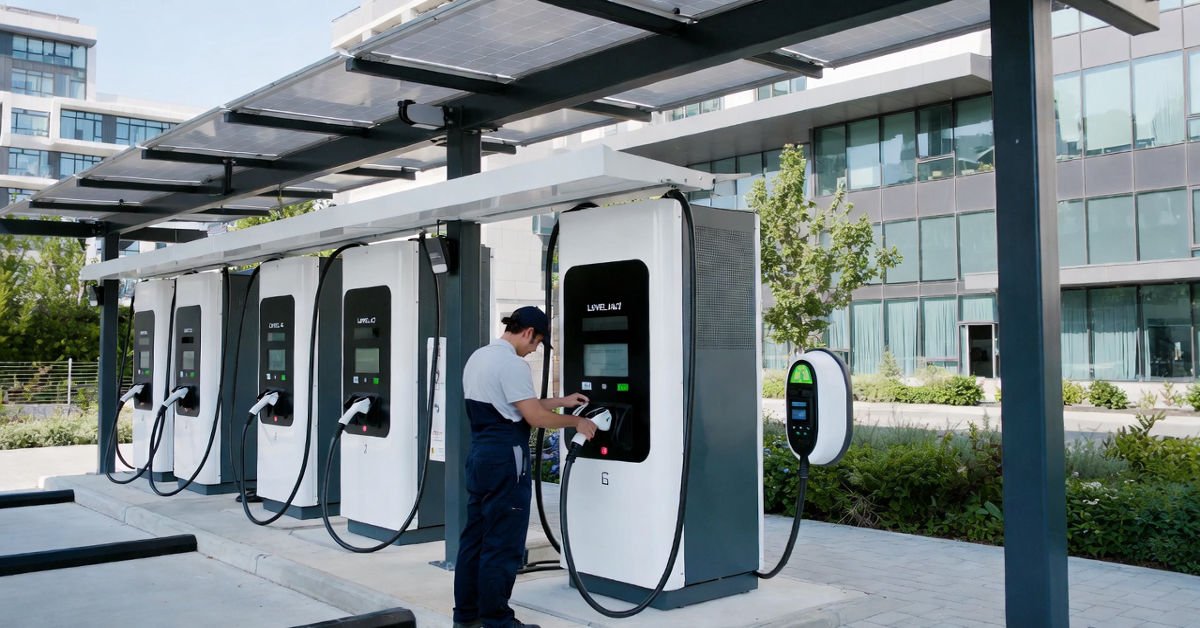
Introduction to EV Charging Stations
EV charging stations are specialized facilities designed to recharge electric vehicles efficiently. They vary widely in terms of power output, installation complexity, and usage frequency. Broadly, charging stations are categorized into:
-
Level 1 Chargers: Low-power, usually 120V, suitable for home use.
-
Level 2 Chargers: Medium-power, 240V, common in public and workplace settings.
-
DC Fast Chargers (Level 3): High-power, 400V-900V, designed for rapid charging in commercial or highway locations.
While the installation of EV charging stations is often highlighted, maintenance costs can significantly affect the total cost of ownership over time. Neglecting maintenance can lead to equipment failure, safety hazards, and financial losses.
Importance of Regular Maintenance
Regular maintenance of EV charging stations is critical for several reasons:
-
Safety: Ensures that electrical components operate safely, reducing the risk of fires or shocks.
-
Reliability: Minimizes downtime, ensuring EV users have consistent access to charging.
-
Efficiency: Keeps charging equipment operating at optimal efficiency, reducing energy loss.
-
Longevity: Extends the lifespan of expensive charging equipment.
-
Regulatory Compliance: Adheres to local safety and electrical standards.
In commercial settings, poor maintenance can damage brand reputation, as users expect fully functional chargers at all times.
Factors Influencing Maintenance Costs
Maintenance costs vary depending on multiple factors:
| Factor | Impact on Cost |
|---|---|
| Charger Type | DC fast chargers are more expensive to maintain than Level 1 or Level 2 chargers due to high power electronics. |
| Usage Frequency | High-traffic stations require more frequent inspections and part replacements. |
| Location | Outdoor stations face weather-related wear and tear, increasing maintenance needs. |
| Technology | Smart chargers with IoT connectivity may reduce downtime but require software updates. |
| Warranty and Service Contracts | Chargers under manufacturer maintenance contracts may lower costs. |
Understanding these factors helps operators anticipate annual maintenance budgets accurately.
Types of EV Charging Station Maintenance
EV charging station maintenance is generally categorized into:
1. Preventive Maintenance
Preventive maintenance involves regular inspections and routine servicing to prevent potential issues. Key tasks include:
-
Cleaning connectors and ports.
-
Checking for software updates and calibration.
-
Inspecting cables and plugs for wear.
-
Testing safety mechanisms such as circuit breakers.
Cost Range: Preventive maintenance usually costs $200-$1,000 per charger annually, depending on type and location.
2. Corrective Maintenance
Corrective maintenance occurs when a problem arises that needs repair or replacement. Examples include:
-
Damaged charging cables.
-
Faulty power electronics in DC fast chargers.
-
Broken user interface screens.
Cost Range: Corrective maintenance costs can range from $500 to $5,000 per incident, particularly for DC fast chargers.
3. Software and Firmware Maintenance
Modern EV chargers often include software management systems that require regular updates to:
-
Improve functionality.
-
Enhance cybersecurity.
-
Provide real-time monitoring and remote diagnostics.
Cost Range: Software maintenance is typically $100-$500 annually, but can vary depending on the provider.
Average Costs of EV Charging Station Maintenance
| Charger Type | Preventive Maintenance (Annual) | Corrective Maintenance (Incident) |
|---|---|---|
| Level 1 (Home) | $100 – $300 | $150 – $400 |
| Level 2 (Residential/Commercial) | $200 – $800 | $300 – $1,500 |
| DC Fast Charger | $1,000 – $3,000 | $2,000 – $5,000 |
As the table indicates, DC fast chargers have the highest maintenance costs, mainly due to complex components and high voltage requirements.
Cost Comparison Between Residential and Commercial Stations
| Category | Residential | Commercial |
|---|---|---|
| Usage | Low to medium | High |
| Maintenance Frequency | Annual | Quarterly or bi-monthly |
| Average Cost | $100 – $800 | $500 – $5,000 |
| Downtime Impact | Minimal | High, affects revenue |
Commercial EV stations demand more robust maintenance planning to minimize downtime and ensure customer satisfaction.
Preventive Maintenance vs. Corrective Maintenance
Preventive maintenance is proactive, ensuring issues are detected before they escalate. Conversely, corrective maintenance is reactive, dealing with problems after they occur. While preventive maintenance may seem costlier upfront, it significantly reduces long-term repair costs.
| Maintenance Type | Advantages | Disadvantages |
|---|---|---|
| Preventive | Reduces major failures, extends equipment life, increases safety | Higher upfront cost |
| Corrective | Only pay when issues arise, lower immediate expense | Risk of downtime, costly repairs, shorter lifespan |
Common Maintenance Issues and Their Costs
-
Connector Wear and Tear: Frequent plug-in/out cycles may degrade connectors. Replacement can cost $50-$300.
-
Cable Damage: Severely worn or damaged cables may cost $200-$500 to replace.
-
Power Electronics Failure: DC fast chargers have complex electronics; repairs can cost $1,500-$5,000.
-
Software Glitches: System updates or resets cost $100-$500 annually.
-
Weather Damage: Outdoor stations face corrosion or water ingress; repair costs vary widely, $300-$2,000.
Technological Advances Reducing Maintenance Costs
Modern EV chargers are increasingly designed to minimize maintenance costs:
-
Smart Monitoring Systems: Enable real-time diagnostics, alerting operators before failures occur.
-
Modular Components: Easy-to-replace parts reduce repair time and cost.
-
Weatherproof Design: Reduces damage from rain, heat, or snow.
-
Remote Software Updates: Minimize on-site visits and labor costs.
Investing in advanced technology can lower maintenance costs by 20-30% over the charger’s lifetime.
Tips for Reducing Maintenance Costs
-
Regular Inspections: Schedule quarterly checks to catch minor issues early.
-
Use Quality Equipment: High-quality cables and connectors last longer.
-
Sign Service Contracts: Manufacturer service agreements can provide predictable costs.
-
Educate Users: Proper handling of chargers reduces wear.
-
Monitor Usage Data: Identify high-traffic units needing more frequent attention.
EV Charging Station Maintenance Cost Projection (5-Year Plan)
| Year | Preventive Maintenance Cost | Corrective Maintenance Cost | Total Cost |
|---|---|---|---|
| 1 | $500 | $300 | $800 |
| 2 | $500 | $500 | $1,000 |
| 3 | $600 | $700 | $1,300 |
| 4 | $600 | $800 | $1,400 |
| 5 | $700 | $1,000 | $1,700 |
Proper planning ensures operators budget effectively for long-term maintenance needs.
Conclusion
Maintaining an EV charging station is an ongoing investment that ensures safety, reliability, and customer satisfaction. While costs vary based on charger type, location, and usage, understanding the factors that influence maintenance can help owners and operators plan budgets and reduce unexpected expenses. Prioritizing preventive maintenance, leveraging technology, and educating users are essential strategies to optimize costs and maximize the lifespan of EV charging infrastructure.
1 thought on “Understanding EV Charging Station Maintenance Cost”