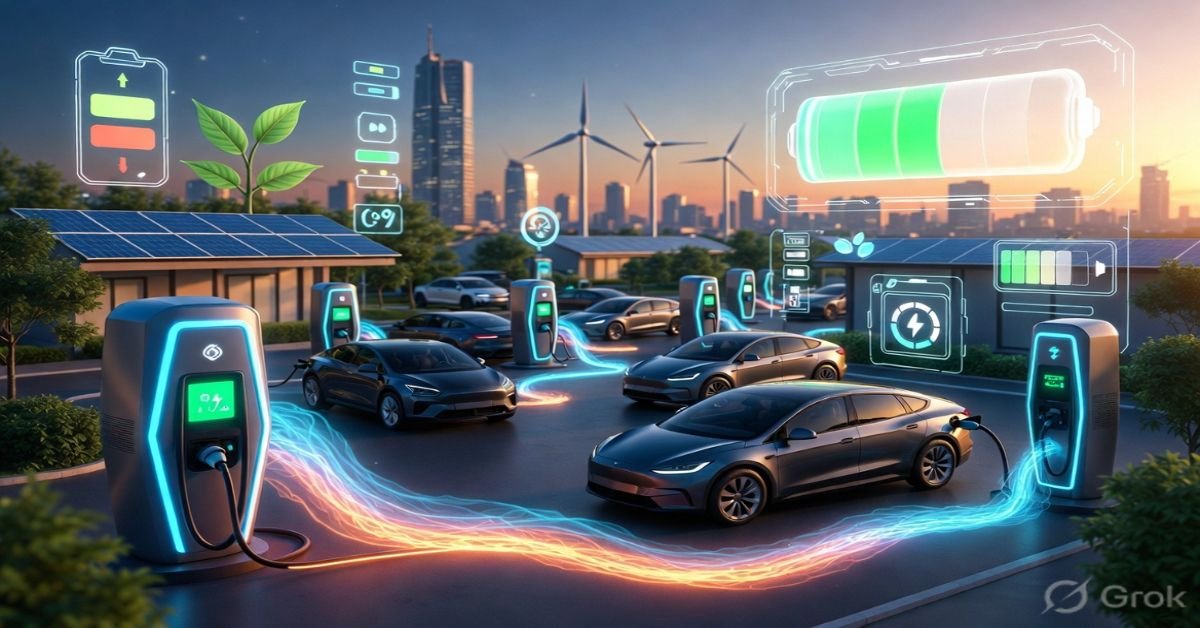
The rapid evolution of electric vehicles (EVs) has transformed the global automotive industry. As more consumers and businesses transition toward cleaner transportation, the demand for efficient, reliable, and fast EV charging battery solutions has grown significantly. Today, advancements in battery technology and charging infrastructure are reshaping how EVs are powered, charged, and maintained.
Understanding EV Charging Battery Solutions
EV charging battery solutions refer to the technologies, systems, and innovations that enable efficient charging, storage, and energy management for electric vehicles. These solutions are designed to improve:
- Charging speed
- Battery lifespan
- Energy efficiency
- Cost-effectiveness
- Environmental sustainability
Modern EV battery systems are no longer limited to simple lithium-ion setups. They now incorporate advanced materials, smart software, and integrated energy ecosystems.
Types of EV Charging Systems
Charging infrastructure plays a crucial role in battery performance and user convenience. Below is a detailed overview:
EV Charging Levels Comparison
| Charging Type | Voltage Range | Charging Speed | Typical Use Case | Time to Full Charge |
|---|---|---|---|---|
| Level 1 | 120V | Slow | Home use | 8–20 hours |
| Level 2 | 240V | Moderate | Homes, offices | 4–8 hours |
| DC Fast Charging | 400V–800V | Ultra-fast | Highways, public stations | 20–60 minutes |
Level 1 and Level 2 chargers are commonly used for residential and workplace charging, while DC fast chargers are essential for long-distance travel.
Latest Innovations in EV Battery Technology
1. Solid-State Batteries
One of the most promising breakthroughs in EV technology is the development of solid-state batteries. Unlike traditional lithium-ion batteries, these use solid electrolytes instead of liquid ones.
Key Benefits:
- Higher energy density
- Faster charging times
- Improved safety
- Longer lifespan
Solid-state batteries are expected to significantly reduce charging times while increasing driving range.
Read more:Compare the best home EV chargers in the UK
2. Lithium Iron Phosphate (LFP) Batteries
LFP batteries are gaining popularity due to their stability and cost-effectiveness.
Advantages:
- Longer cycle life
- Lower cost compared to other lithium-ion batteries
- Enhanced safety
- Minimal risk of overheating
These batteries are widely used in entry-level EVs and energy storage systems.
3. Battery Swapping Technology
Battery swapping allows EV users to replace a depleted battery with a fully charged one in minutes.
Benefits:
- Eliminates charging wait time
- Reduces need for large battery packs
- Ideal for commercial fleets and two-wheelers
This solution is especially effective in urban environments where time efficiency is critical.
4. Ultra-Fast Charging Batteries
Recent innovations focus on enabling EVs to charge up to 80% in under 15 minutes.
Features:
- High-capacity charging infrastructure
- Advanced thermal management systems
- Improved battery chemistry
Ultra-fast charging is essential for mass EV adoption, especially in countries with large transportation networks.
Smart Charging Solutions
Smart charging integrates software and connectivity into EV charging systems, optimizing energy use.
Key Features:
- Real-time monitoring
- Load balancing
- Scheduled charging
- Integration with renewable energy
Smart charging systems help reduce electricity costs and prevent grid overload.
Vehicle-to-Grid (V2G) Technology
Vehicle-to-Grid (V2G) allows EVs to supply electricity back to the grid.
Advantages:
- Supports renewable energy integration
- Provides backup power
- Generates income for EV owners
This bidirectional charging system is a major step toward sustainable energy ecosystems.
Wireless EV Charging
Wireless or inductive charging eliminates the need for cables.
How It Works:
- Charging pads are installed on the ground
- Vehicles receive energy through electromagnetic fields
Benefits:
- Convenience
- Reduced wear and tear
- Ideal for autonomous vehicles
Although still emerging, wireless charging is expected to become mainstream in the future.
Portable EV Charging Solutions
Portable chargers provide flexibility for EV users.
Use Cases:
- Emergency charging
- Travel convenience
- Remote locations
These compact devices are particularly useful in areas with limited charging infrastructure.
Read more:Federal EV Rebate Application Process in the USA
Renewable Energy Integration
Modern EV charging systems are increasingly powered by renewable sources like solar and wind energy.
Benefits:
- Reduces carbon footprint
- Lowers electricity costs
- Promotes sustainability
Example: Solar EV Charging Setup
| Component | Function |
|---|---|
| Solar Panels | Generate electricity |
| Inverter | Convert DC to AC power |
| Battery Storage | Store excess energy |
| EV Charger | Deliver power to vehicle |
This integration supports a cleaner and more resilient energy system.
Advanced Battery Management Systems (BMS)
Battery Management Systems are critical for optimizing battery performance.
Functions:
- Monitor battery health
- Prevent overcharging and overheating
- Balance cell voltage
- Extend battery lifespan
A robust BMS ensures safety and efficiency in EV operations.
Fast-Charging Infrastructure Expansion
Governments and private companies are investing heavily in charging networks.
Key Developments:
- Expansion of highway charging stations
- Urban charging hubs
- Integration with smart cities
Improved infrastructure reduces range anxiety and boosts EV adoption.
Challenges in EV Charging Battery Solutions
Despite advancements, several challenges remain:
1. High Initial Costs
Advanced battery technologies can be expensive, though prices are gradually decreasing.
2. Charging Infrastructure Gaps
Rural and remote areas still lack sufficient charging stations.
3. Battery Recycling
Proper disposal and recycling of EV batteries are critical for environmental sustainability.
Future Trends in EV Charging and Batteries
1. AI-Powered Charging Systems
Artificial intelligence will optimize charging patterns and predict energy demand.
2. Second-Life Battery Applications
Used EV batteries can be repurposed for energy storage.
3. Hydrogen-Electric Hybrid Systems
Combining hydrogen fuel cells with EV batteries may offer extended range solutions.
4. Grid-Integrated Charging Networks
Seamless integration with national grids will enhance efficiency and reliability.
Comparison of Modern Battery Technologies
| Battery Type | Energy Density | Cost | Safety | Charging Speed | Lifespan |
|---|---|---|---|---|---|
| Lithium-Ion | High | Medium | Moderate | Fast | Medium |
| LFP | Medium | Low | High | Moderate | Long |
| Solid-State | Very High | High | Very High | Very Fast | Very Long |
Best Practices for EV Battery Maintenance
To maximize battery life and efficiency:
- Avoid frequent full discharges
- Use recommended chargers
- Keep battery within optimal temperature range
- Update vehicle software regularly
Proper maintenance can significantly extend battery lifespan.
Read more:What is the $2500 EV Incentive in Texas?
Why EV Charging Battery Solutions Matter
The evolution of EV charging battery solutions is essential for:
- Reducing greenhouse gas emissions
- Lowering transportation costs
- Supporting renewable energy adoption
- Enhancing user convenience
As technology advances, EVs will become more accessible and practical for everyday use.
Conclusion
The latest EV charging battery solutions represent a significant leap forward in sustainable transportation. From solid-state batteries and ultra-fast charging to smart grids and wireless charging, the industry is evolving rapidly.
As infrastructure expands and technology matures, EV adoption will continue to accelerate worldwide. Investing in advanced charging solutions not only improves efficiency but also contributes to a cleaner, greener future.
For consumers and businesses alike, staying informed about these innovations is key to making smart, future-ready decisions in the electric mobility space.