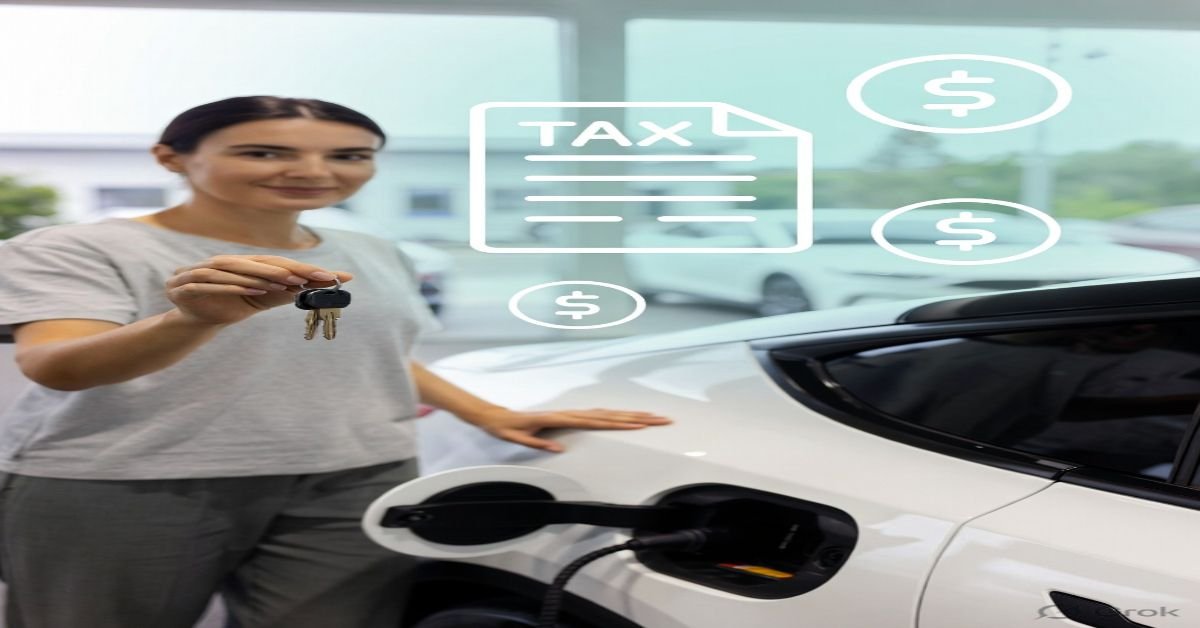
The adoption of electric vehicles (EVs) in the United States is growing rapidly, supported by government incentives designed to make clean transportation more affordable. One of the most valuable benefits available to buyers is the federal EV rebate, officially known as the Clean Vehicle Tax Credit.
In this guide, you will learn the complete federal EV rebate application process, eligibility rules, required documents, and practical tips to successfully claim your incentive.
What is the Federal EV Rebate?
The federal EV rebate is a financial incentive provided by the U.S. government to encourage the purchase of electric vehicles. It is part of the Inflation Reduction Act (IRA) and offers up to $7,500 in tax credits for eligible new EVs and up to $4,000 for used EVs.
Unlike traditional rebates, this benefit is typically claimed as a tax credit when filing your federal income tax return.
Key Benefits of the Federal EV Tax Credit
| Benefit Type | Details |
|---|---|
| Maximum Credit | Up to $7,500 (new EVs) |
| Used EV Credit | Up to $4,000 |
| Eco-Friendly | Supports clean energy adoption |
| Cost Savings | Reduces overall vehicle cost |
| Instant Discount Option | Available at dealerships (from 2024 onwards) |
Read more:EV Lithium-Ion Battery Replacement
Eligibility Criteria for EV Rebate
Before applying, ensure you meet the eligibility requirements:
Vehicle Requirements
| Requirement | Details |
|---|---|
| Vehicle Type | Electric or Plug-in Hybrid |
| Final Assembly | Must occur in North America |
| Battery Rules | Must meet critical mineral and component sourcing rules |
| Price Cap | $55,000 (cars), $80,000 (SUVs/trucks) |
Buyer Income Limits
| Filing Status | Income Limit |
|---|---|
| Single | $150,000 |
| Head of Household | $225,000 |
| Married Filing Jointly | $300,000 |
Step-by-Step Federal EV Rebate Application Process
Step 1: Check Vehicle Eligibility
Before purchasing, confirm that the EV model qualifies under federal guidelines. Manufacturers often provide eligibility details on their official websites.
Step 2: Verify Your Income Eligibility
Ensure your annual income falls within the specified limits. This is crucial for claiming the tax credit.
Step 3: Purchase the EV
Buy the vehicle from a licensed dealer. Starting in 2024, you may also choose to transfer the credit directly to the dealer for an instant discount.
Step 4: Obtain Required Documents
Collect and safely store all necessary documents:
| Document | Purpose |
|---|---|
| Purchase Invoice | Proof of purchase |
| VIN (Vehicle Identification Number) | Confirms vehicle eligibility |
| Seller Report | Provided by dealer |
| Registration Documents | Ownership proof |
Step 5: File IRS Form 8936
When filing your federal taxes, complete IRS Form 8936 (Qualified Plug-in Electric Drive Motor Vehicle Credit).
Step 6: Claim the Tax Credit
Submit your tax return with Form 8936. The credit will reduce your tax liability.
Important Notes for 2026 Applicants
- The tax credit is non-refundable, meaning it only reduces taxes owed.
- Battery sourcing rules may affect the total credit amount.
- Not all EVs qualify for the full $7,500 credit.
- Leasing an EV may allow you to indirectly benefit from incentives through reduced monthly payments.
Read more:HighwayRange EV Bike Cruisi Review
Common Mistakes to Avoid
| Mistake | Impact |
|---|---|
| Buying an ineligible EV | No tax credit |
| Missing documentation | Claim rejection |
| Exceeding income limits | Disqualification |
| Filing incorrect IRS form | Processing delays |
Expert Tips for a Smooth Application
- Always verify eligibility using official government resources before purchase.
- Keep both digital and physical copies of all documents.
- Consult a tax professional if you are unsure about filing requirements.
- Consider dealership point-of-sale credits for immediate savings.
Conclusion
The federal EV rebate application process in the USA is straightforward if you follow the correct steps and meet eligibility criteria. With incentives of up to $7,500, switching to an electric vehicle is not only environmentally responsible but also financially beneficial.
By understanding the process, preparing documents, and filing accurately, you can take full advantage of this valuable government program and reduce your overall vehicle cost.
hsjesnhfflxmduretnmyzzwhrnzjys