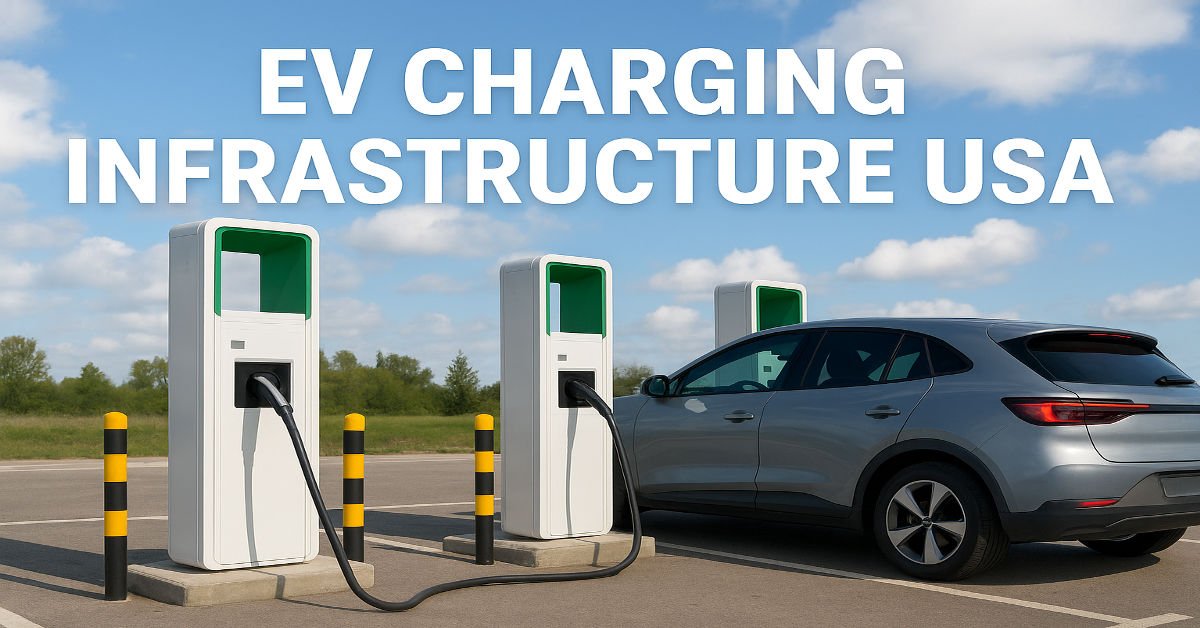
The EV charging infrastructure in the USA is expanding rapidly as electric vehicles (EVs) become more popular nationwide. With government support, private investments, and growing consumer demand, the United States is building one of the world’s most advanced charging ecosystems. This article explores the current landscape, types of charging stations, government initiatives, key benefits, and future trends — all focused on helping EV owners and enthusiasts stay informed.
What Is EV Charging Infrastructure?
EV charging infrastructure refers to the network of charging stations, technologies, and systems that allow electric vehicle owners to charge their vehicles.
In the USA, the infrastructure includes public chargers, home charging units, and high-speed DC fast chargers used for long-distance travel.
Growth of EV Charging Infrastructure in the USA
The U.S. government, automotive industry, and energy providers are collectively boosting nationwide charger installation. According to recent goals, the U.S. aims to build over 500,000 public EV chargers by 2030.
Key Drivers of Growth
-
Federal and state tax incentives
-
Electrification policies
-
Increased EV adoption
-
Private sector investments from Tesla, Ford, ChargePoint, and Electrify America
Types of EV Chargers in the USA
1. Level 1 Chargers (Standard Home Charging)
-
Uses regular 120V home outlets
-
Slowest charging option
-
Ideal for overnight charging
2. Level 2 Chargers (Fast Home & Public Charging)
-
Uses 240V outlets
-
Faster charging for homes, workplaces, and commercial areas
3. DC Fast Chargers (Superfast Public Charging)
-
Ideal for long trips
-
Can charge an EV from 10% to 80% in 20–30 minutes
-
Found along highways, EV corridors, and major cities
Table: Comparison of EV Charger Types in the USA
| Charger Type | Voltage | Charging Speed | Best For | Availability in USA |
|---|---|---|---|---|
| Level 1 | 120V | Slow (2–5 miles/hour) | Home use | Widely available |
| Level 2 | 240V | Medium (10–60 miles/hour) | Homes & public | Rapidly growing |
| DC Fast Charger | 400–900V | Very Fast (150–350 kW) | Highways, long trips | Expanding nationwide |
Government Initiatives Supporting EV Charging in the USA
National Electric Vehicle Infrastructure (NEVI) Program
The U.S. government has allocated billions to build public fast chargers every 50 miles along major highways.
EV Tax Credits
Both EV buyers and charging station installers can receive credits that reduce overall costs.
State-Level Programs
-
California: Largest number of public chargers
-
Texas & New York: Rapidly scaling EV corridors
-
Florida & Washington: Expanding DC fast charging networks
Benefits of Strong EV Charging Infrastructure in the USA
1. Boosts EV Adoption
More available chargers increase driver confidence.
2. Reduces Carbon Emissions
Supports the country’s clean energy goals.
3. Encourages Economic Growth
Jobs in installation, maintenance, and manufacturing.
4. Supports Long-Distance Travel
Highway fast-charging corridors remove range anxiety.
Challenges Facing EV Charging Infrastructure
| Challenge | Description |
|---|---|
| High installation costs | Fast chargers can be expensive to install and maintain |
| Grid capacity issues | Some regions require electrical upgrades |
| Uneven distribution | Rural areas still have fewer charging stations |
| Compatibility & payment systems | Standardization is improving but still ongoing |
Future Trends in EV Charging Infrastructure USA
1. Ultra-Fast Charging (350kW+)
Will reduce charging time to less than 15 minutes.
2. Wireless Charging Pads
Being tested for home and commercial use.
3. Solar-Powered EV Charging Stations
Eco-friendly and cost-efficient.
4. Battery-Storage-Backed Chargers
To reduce grid load and support remote installations.
Conclusion
The EV charging infrastructure in the USA is evolving at an impressive pace, backed by innovation, government support, and rising EV demand. With a growing network of Level 2 and DC fast chargers, the nation is moving closer to a cleaner, more sustainable transportation future.
Whether you’re an EV owner, business operator, or industry enthusiast, staying informed about these developments can help you make smarter decisions in your electric mobility journey.
1 thought on “EV Charging Infrastructure USA: Powering the Future of Electric Mobility”