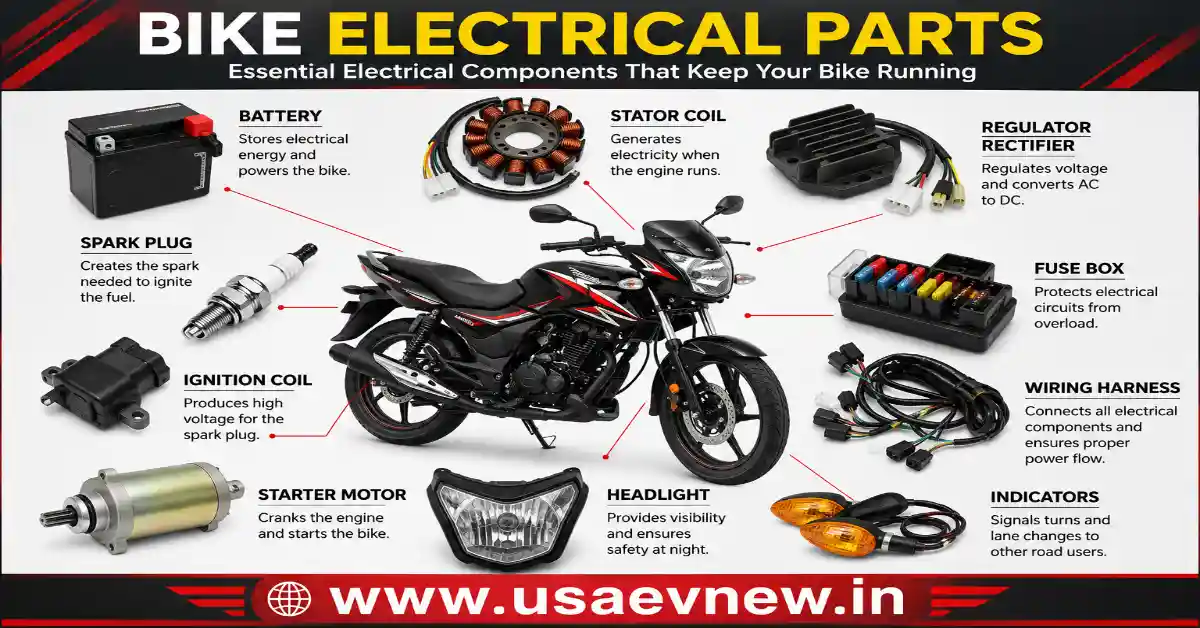
Bike Electrical Parts and been greeted by complete silence, you know how frustrating electrical problems can be. I learned this the hard way during an early morning ride to work. The engine wouldn’t start, the headlight looked dim, and after checking everything, I discovered a loose battery terminal was the real culprit.
That small incident taught me something important: understanding basic Bike Electrical Parts can save time, money, and unnecessary trips to the mechanic.
Whether you ride a commuter motorcycle, a sport bike, or a scooter, this guide explains the most important electrical components, how they work, common problems, and simple maintenance tips.
What Are Bike Electrical Parts?
Bike electrical parts are the components responsible for starting the engine, powering the lights, charging the battery, operating the horn, and supporting electronic systems.
Modern motorcycles depend on electrical systems far more than older bikes. Even fuel injection, digital dashboards, ABS, and USB charging ports rely on a healthy electrical system.
Main Bike Electrical Parts
| Part | Purpose | Common Problems |
|---|---|---|
| Battery | Stores electrical power | Weak charge, corrosion |
| Alternator/Stator | Generates electricity | Charging failure |
| Regulator Rectifier | Controls battery charging | Overcharging |
| Starter Motor | Starts engine | Slow cranking |
| Spark Plug | Ignites fuel | Fouling |
| Ignition Coil | Produces high voltage | Misfiring |
| Fuse Box | Protects circuits | Blown fuse |
| Wiring Harness | Connects components | Broken wires |
| Headlights | Road visibility | Dim lighting |
| Indicators | Turning signals | Fast blinking |
| Tail Light | Rear visibility | Bulb failure |
| Horn | Safety alert | Weak sound |
1. Motorcycle Battery
The battery is the heart of the electrical system.
It powers:
- Electric starter
- Dashboard
- Horn
- Lights
- ECU
- Fuel pump
Common Battery Problems
- Bike won’t start
- Slow self-start
- Weak horn
- Flickering display
- Dim headlights
Maintenance Tips
- Clean battery terminals regularly.
- Check voltage every few months.
- Avoid leaving lights on when the engine is off.
- Replace old batteries before they fail completely.
2. Stator (Alternator)
Many riders think the battery powers everything, but once the engine is running, the stator generates electricity.
It charges the battery while supplying power to the motorcycle.
Signs of a Bad Stator
- Battery drains quickly
- Bike stalls unexpectedly
- Charging warning light
- Hard starting
3. Regulator Rectifier
The regulator rectifier converts AC electricity from the stator into DC power and prevents battery overcharging.
A failed regulator can damage an otherwise healthy battery.
Symptoms
- Battery boiling
- Frequent battery replacement
- Electrical accessories malfunctioning
- Burning smell near electrical components
4. Starter Motor
The starter motor spins the engine during ignition.
If it fails, you may hear clicking sounds but the engine won’t crank.
Causes
- Weak battery
- Worn brushes
- Loose wiring
- Damaged relay
5. Spark Plug
A spark plug creates the spark needed to ignite the fuel-air mixture.
Even though it’s small, it has a major effect on performance.
Signs It Needs Replacement
- Poor fuel economy
- Rough idle
- Misfires
- Difficult starting
Most manufacturers recommend inspecting spark plugs during routine service intervals.
6. Ignition Coil
The ignition coil increases battery voltage enough to produce a strong spark.
A faulty coil often causes:
- Engine hesitation
- Power loss
- Poor acceleration
- Misfires
7. Wiring Harness
The wiring harness connects every electrical component.
A damaged wire can create multiple electrical issues that are difficult to diagnose.
Things to Watch For
- Melted insulation
- Rodent damage
- Loose connectors
- Water intrusion
- Corrosion
During monsoon riding, checking connectors for moisture can prevent unexpected electrical failures.
8. Motorcycle Fuses
Fuses protect expensive electrical parts from short circuits.
Never replace a blown fuse with a higher-rated one. Doing so can damage the wiring or electronic components.
Keep a few spare fuses in your toolkit—they’re inexpensive and can save a ride.
9. Lighting System
Motorcycle lighting includes:
- Headlight
- Tail light
- Brake light
- Number plate light
- Turn indicators
LED lights generally last longer and consume less power than traditional halogen bulbs.
10. Horn
The horn is an important safety feature, especially in busy traffic.
If it sounds weak:
- Check battery voltage.
- Inspect wiring.
- Clean horn terminals.
- Verify the horn switch.
11. Switches and Controls
Handlebar switches control:
- Headlights
- Indicators
- Horn
- Engine kill switch
- Starter button
Dust and moisture can cause switch contacts to fail over time. A suitable electrical contact cleaner can help restore proper operation.
12. Sensors and Electronic Components
Modern motorcycles may include:
- ABS sensors
- Side-stand switch
- Neutral switch
- Throttle position sensor
- Oxygen sensor
- Crank position sensor
When these components fail, the engine warning light may illuminate and performance can be affected.
How the Electrical System Works
A simplified sequence looks like this:
- The battery provides power to start the bike.
- The starter motor cranks the engine.
- The stator begins generating electricity.
- The regulator rectifier converts and regulates the current.
- The battery is recharged.
- Electrical accessories receive stable power while riding.
Understanding this flow makes troubleshooting much easier.
Common Electrical Problems and Their Causes
| Problem | Possible Cause |
|---|---|
| Bike won’t start | Dead battery, faulty starter, blown fuse |
| Headlights dim | Weak battery, charging issue |
| Battery keeps dying | Bad stator or regulator rectifier |
| Indicators not working | Blown bulb or faulty flasher relay |
| Horn weak | Low battery voltage |
| Dashboard flickering | Loose battery terminal or poor ground |
| Engine misfiring | Faulty spark plug or ignition coil |
Step-by-Step Electrical Inspection
When I suspect an electrical issue, I follow this routine:
- Inspect battery terminals for corrosion or looseness.
- Measure battery voltage with a multimeter.
- Check all fuses.
- Test lights and horn.
- Look for damaged wiring.
- Ensure connectors are secure.
- Verify the charging voltage with the engine running.
- Replace worn spark plugs if needed.
This process often identifies the problem before replacing any parts unnecessarily.
Common Mistakes Riders Make
- Ignoring a weak battery until the bike won’t start.
- Installing incorrect fuse ratings.
- Using low-quality replacement parts.
- Washing the bike without protecting electrical connectors.
- Leaving accessories connected when parked.
- Neglecting routine battery maintenance.
Avoiding these mistakes can extend the life of your motorcycle’s electrical system.
Choosing Quality Replacement Parts
When replacing electrical components:
- Match the manufacturer’s specifications.
- Buy from reputable brands or authorized dealers.
- Check compatibility with your motorcycle model.
- Avoid counterfeit products.
- Ensure connectors and wiring match the original equipment.
A slightly cheaper part may fail sooner and cost more in the long run.
Basic Maintenance Tips
- Inspect battery terminals every few months.
- Keep connectors clean and dry.
- Replace damaged wiring promptly.
- Check charging voltage during servicing.
- Test lights before long trips.
- Carry spare fuses.
- Follow the service schedule in your owner’s manual.
Frequently Asked Questions
Which electrical part fails most often on a motorcycle?
The battery is one of the most common failure points, especially if it is several years old or not maintained properly.
Can I ride with a bad regulator rectifier?
It’s not recommended. A faulty regulator can overcharge or undercharge the battery, leading to breakdowns and possible damage to other electrical components.
How long does a motorcycle battery last?
Most motorcycle batteries last around 2–5 years, depending on usage, climate, maintenance, and battery type.
What tools are useful for diagnosing electrical problems?
A digital multimeter, battery charger, fuse puller, screwdrivers, and electrical contact cleaner are useful for basic troubleshooting.
Final Thoughts
Bike Electrical Parts doesn’t mean you have to become a mechanic. Even a basic understanding of the battery, charging system, wiring, and ignition components can help you identify problems early and communicate more effectively with a repair shop.
From personal experience, spending a few minutes checking battery terminals, testing the charging system, and inspecting wiring before a long ride has prevented more than one roadside breakdown. Regular maintenance, quality replacement parts, and prompt attention to small electrical issues go a long way toward keeping your motorcycle reliable and safe.