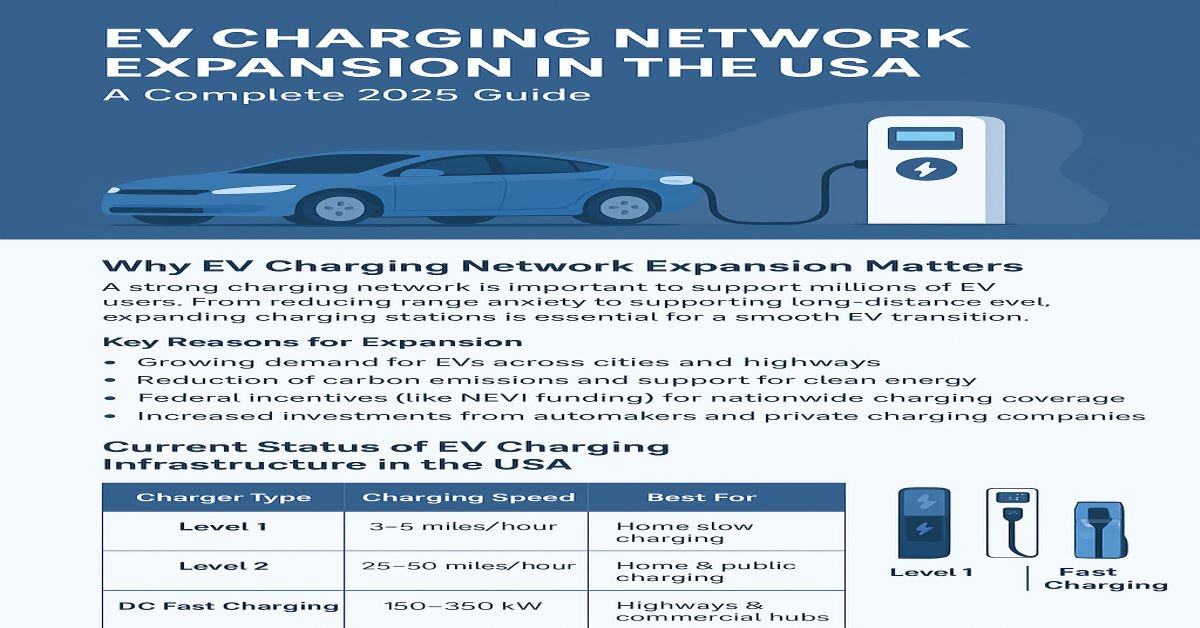
EV Charging Network Expansion in the USA transitions in the world. As EV adoption rises, expanding the EV charging network in the USA has become essential for supporting sustainability, improving accessibility, and meeting national clean-energy goals. This guide explains how the country’s charging infrastructure is growing, the key players involved, benefits for EV owners, challenges, and the future outlook.
Why EV Charging Network Expansion Matters
A strong charging network is important to support millions of EV users. From reducing range anxiety to supporting long-distance travel, expanding charging stations is essential for a smooth EV transition.
Key Reasons for Expansion
-
Growing demand for EVs across cities and highways
-
Reduction of carbon emissions and support for clean energy
-
Federal incentives (like NEVI funding) for nationwide charging coverage
-
Increased investments from automakers and private charging companies
Current Status of EV Charging Infrastructure in the USA
Types of Charging Stations
There are three major types of chargers available:
| Charger Type | Charging Speed | Best For | Typical Usage |
|---|---|---|---|
| Level 1 | 3–5 miles/hour | Home slow charging | Overnight charging |
| Level 2 | 25–30 miles/hour | Home & public charging | Workplaces, malls, parking lots |
| DC Fast Charging | 150–350 kW | Long-distance travel | Highways & commercial hubs |
Major Companies Expanding EV Charging Networks in the USA
1. Tesla Supercharger Network
-
Largest and fastest-growing ultra-fast charging network
-
Recently opened to non-Tesla EVs via the NACS standard
2. Electrify America
-
Provides coast-to-coast fast charging
-
Known for 150kW–350kW high-speed chargers
3. ChargePoint
-
Focused on Level 2 workplace and public charging
-
Over 200,000 charging spots globally
4. EVgo
-
Powered by renewable energy
-
Extensive urban fast-charging network
Government Initiatives Driving Expansion
1. NEVI (National Electric Vehicle Infrastructure) Program
The U.S. government aims to build 500,000 charging stations by 2030 through NEVI funding.
2. Inflation Reduction Act (IRA) Support
-
Tax credits for EV owners
-
Incentives for businesses installing chargers
-
Grants for rural and underserved communities
How EV Charging Network Expansion Benefits Drivers
1. Reduced Range Anxiety
With more chargers, EV owners feel safer during long trips.
2. Faster Travel
Ultra-fast chargers (350kW) allow vehicles to recharge in 10–20 minutes.
3. Cost Savings
Electric charging is cheaper than gasoline, especially with home Level 2 chargers.
4. Environmental Impact
Supports the transition toward net-zero emissions and cleaner air.
Challenges in Expanding EV Charging Networks
1. High Installation Costs
Fast-charging stations can cost up to $100,000+ per location.
2. Grid Capacity Limitations
Power upgrades are required in many states to support ultra-fast charging.
3. Rural Coverage Gaps
Most charging stations are concentrated in metropolitan areas.
Future of the EV Charging Network in the USA
1. More Nationwide Fast Charging
More chargers will be added along highways, national parks, and inter-city routes.
2. Wireless Charging Innovation
Electric roads and pad-based charging systems are emerging.
3. Smart Grid Integration
AI and smart meters will help balance energy demand and renewable energy usage.
4. Universal Plug Standards
NACS (North American Charging Standard) is becoming the new nationwide connector.
Conclusion: A Stronger EV Future Ahead
The expansion of the EV charging network in the USA is accelerating faster than ever. With federal funding, private sector investments, and rising EV adoption, the country is moving towards an efficient, accessible, and eco-friendly transportation system. Supporting this infrastructure today will help create a cleaner and more sustainable future for all.
Looking for a new betting spot? Heard f8bet34vip is legit. VIP treatment sounds appealing. Might give it a shot tonight. Check it out here f8bet34vip